Author: Farnoud Ghasemi
On 1 July, the XCARCITY project organised the WP6 Federated Digital Twin Workshop, bringing together researchers, industry partners, and digital twin developers to exchange knowledge on the future of urban digital twins. The workshop served as an important platform for discussing how different digital twin solutions can work together, what challenges remain in their development, and how federated digital twins can support research and decision-making in real-world urban environments.
The primary objective of the workshop was to explore the functionalities of different digital twin platforms developed within and beyond XCARCITY, identify common challenges in their implementation, and discuss opportunities for connecting existing models and tools. Rather than viewing each digital twin as a standalone solution, participants explored how these complementary systems could be linked to create more powerful, interoperable, and scalable platforms for urban planning and mobility management.
The workshop was opened by Tian Zwart, who welcomed participants and introduced the goals of the session. He highlighted the importance of collaboration between academia and industry in developing digital twin technologies that are both scientifically robust and practically applicable.
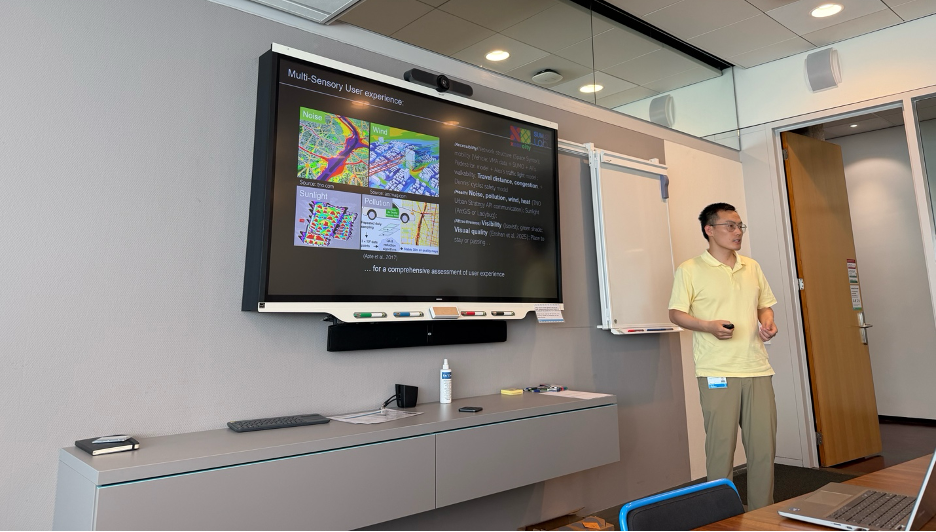
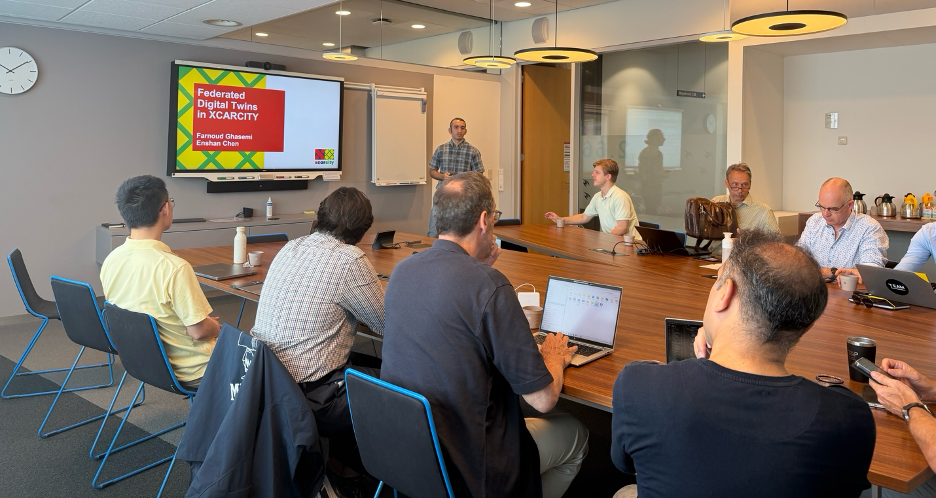
The first technical session featured presentations by Farnoud Ghasemi and Enshan Chen, who introduced the digital twins developed within the XCARCITY project. They presented two project use cases focusing on Merwe-Vierhavens (M4H) in Rotterdam and Amsterdam Zuidas, demonstrating how digital twins can support urban mobility analysis and planning through data-driven simulation and visualization. Beyond showcasing the applications, the presenters also explained the underlying architecture of the XCARCITY digital twins and the modelling framework that enables their operation. The session provided valuable insight into how different models, datasets, and simulation components are integrated into a federated digital twin, while also highlighting the scientific principles behind the digital twin design. The presentations illustrated how federated digital twins can support evidence-based decision-making by combining diverse urban data sources into interactive and dynamic representations of the city.
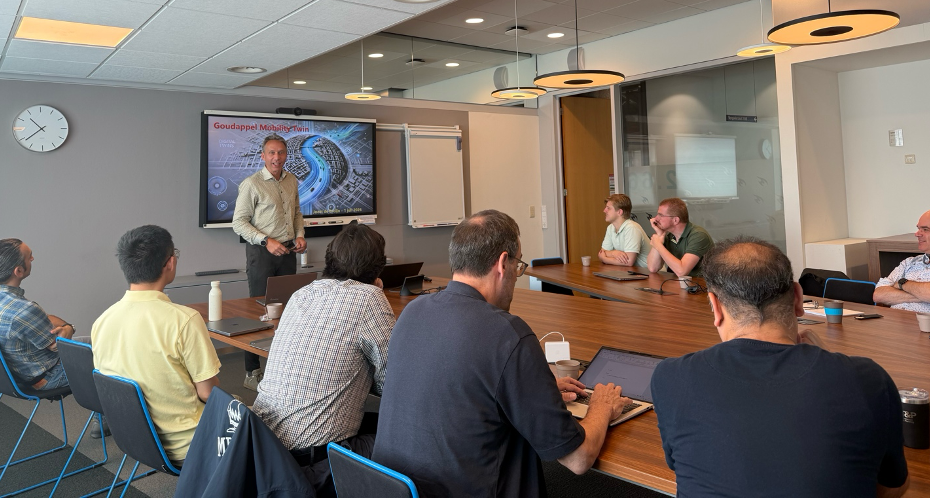
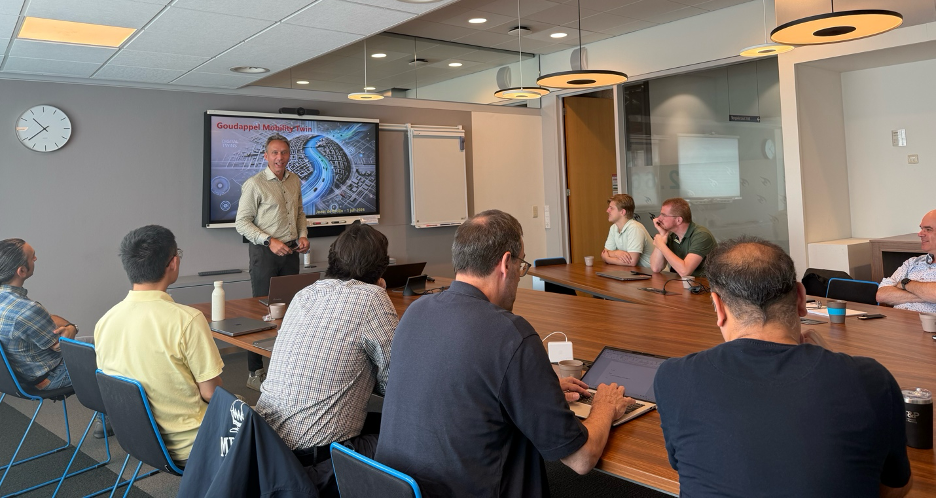
The workshop then shifted towards industry perspectives. Joost de Bruijn from Goudappel presented the company’s digital twin platform, sharing practical experiences from developing and deploying digital twins for mobility planning and urban analysis. His presentation demonstrated how digital twins are already being used to support planning processes and policy evaluation in practice, while also discussing the requirements for creating solutions that are useful for municipalities and other stakeholders.
Next, Panos Kalogeropoulos from OpenRemote introduced the OpenRemote platform and its approach to building open, interoperable digital twin solutions. The presentation focused on the advantages of open architectures, real-time data integration, and flexible system design, illustrating how open technologies can facilitate collaboration across organisations and enable the development of federated digital twin ecosystems.
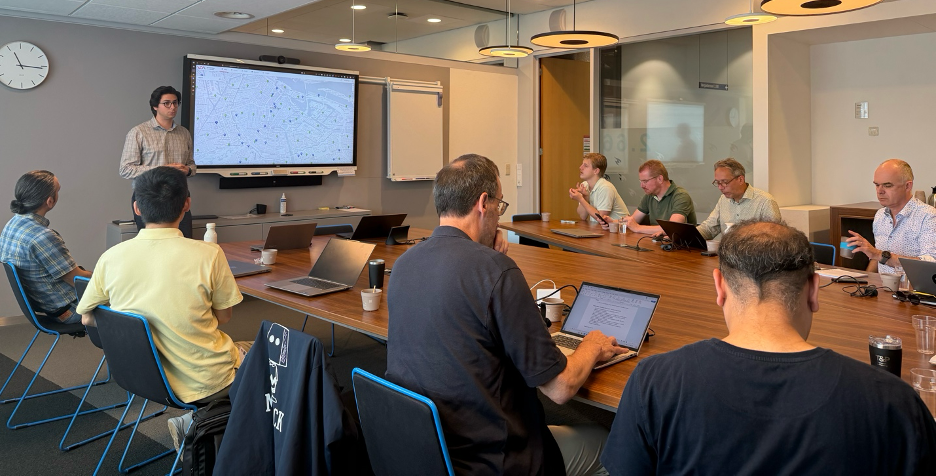
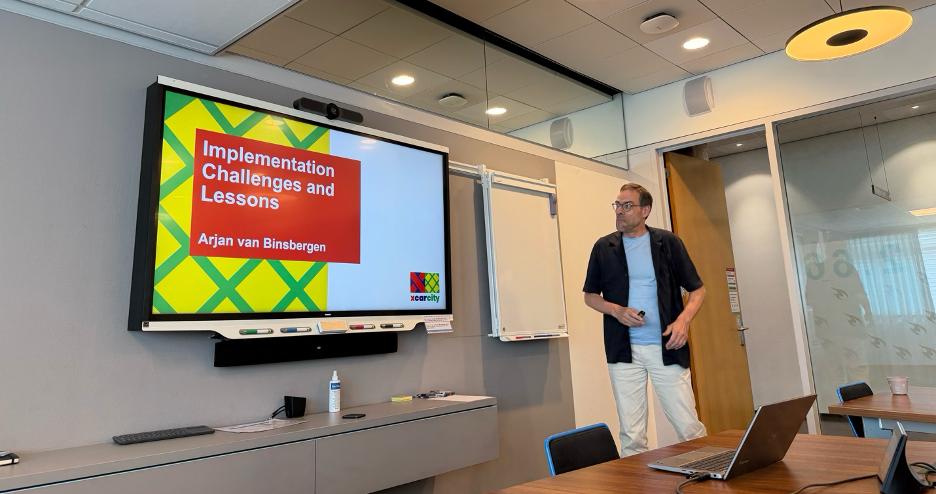
Following the presentations, Arjan van Binsbergen led an engaging discussion on the challenges of developing and implementing digital twins. Participants explored key topics including data availability and quality, interoperability between different platforms, governance and data ownership, scalability, and the practical translation of digital twin concepts into operational decision-support tools. The discussion highlighted that while digital twins have made significant technological progress, addressing organisational and technical barriers remains essential for their successful adoption in practice.
Overall, the WP6 Federated Digital Twin Workshop successfully brought together complementary expertise from academia and industry, creating a shared understanding of current digital twin capabilities, practical implementation challenges, and future opportunities. The discussions and insights generated during the workshop will help guide the further development of the XCARCITY federated digital twins, supporting the project’s vision of creating connected, data-driven tools that enable smarter, more sustainable urban mobility and planning.