Author: Tian Zwart
From 1–3 June, researchers from the XCARCITY and INFUZE research programmes gathered in Leeds for a collaborative summer school hosted by the Institute for Transport Studies at the University of Leeds. Titled “Understanding the pathways to car-free living in urban contexts,” the event coincided with the third anniversary of the XCARCITY project and created a valuable opportunity for exchange between the two initiatives.
Over the course of three days, participants explored pathways towards car-low living in urban environments, combining policy discussions, methodological workshops, field-based learning, and forward-looking collaboration.
Day 1: Policy, Design, and Urban Context
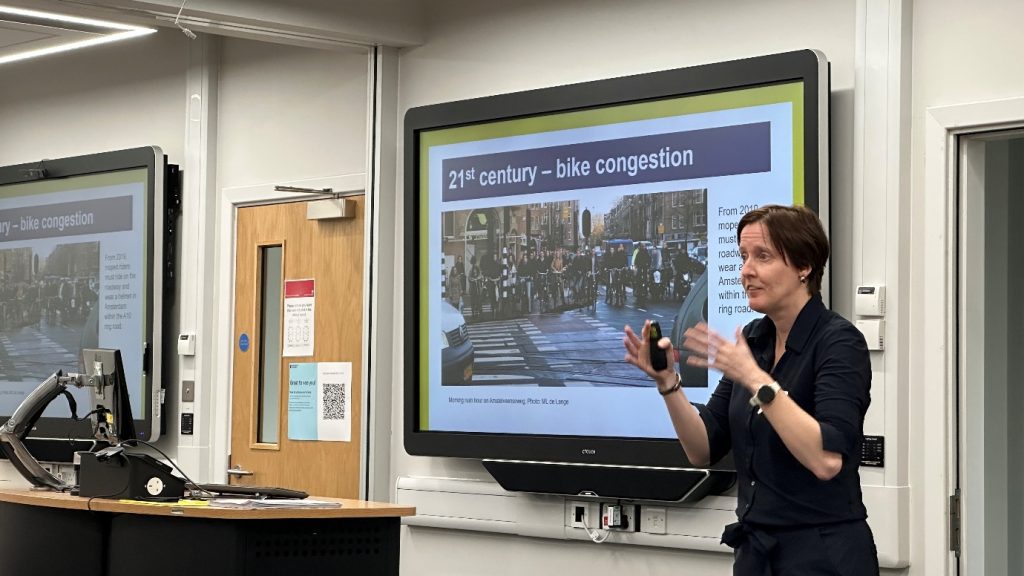
The summer school opened with a focus on transport policy and urban design. Jillian Anable introduced key aspects of transport policymaking in the United Kingdom, including insights into car ownership by households.
This was followed by a Dutch perspective on car-low city design, presented by Maaike Snelder, highlighting applied examples from XCARCITY’s use cases in Almere Pampus, Amsterdam Zuidas, and Rotterdam Merwe-Vierhavens.
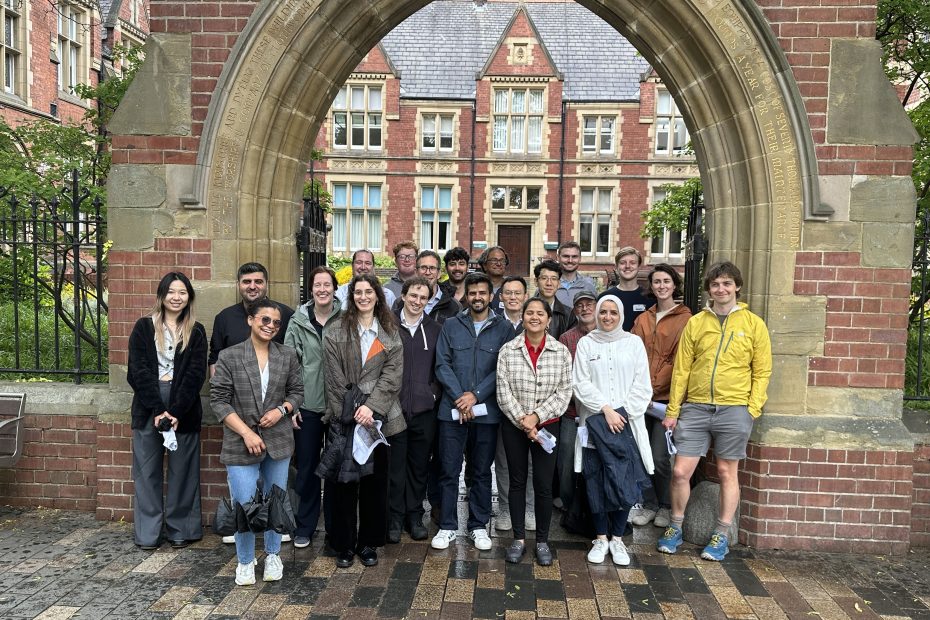
Participants then took to the streets of Leeds for a guided walk led by Greg Marsden. The excursion offered insight into the city’s evolution, from its industrial past and its legacy as a “motorway city of the seventies” to its ongoing transition towards a more sustainable, less car-dependent future. Observing these developments on site provided a valuable foundation for later discussions.
The afternoon shifted towards technical exchange. Researchers from both projects engaged in in-depth sessions on topics including co-design approaches, societal readiness, digital twins, crowdsourced parcel delivery, and dynamic road space allocation.
Day 2: Methods and Approaches
The second day focused on research methodologies, with an emphasis on how methods are developed and applied in practice.
The day opened with a lecture on XCARCITY’s Research-by-Design methodology, emphasising its iterative nature. Rather than following a linear process, this approach emphasises iteration, allowing insights from later stages to inform earlier decisions and supporting the co-evolution of research, design, and tool development.
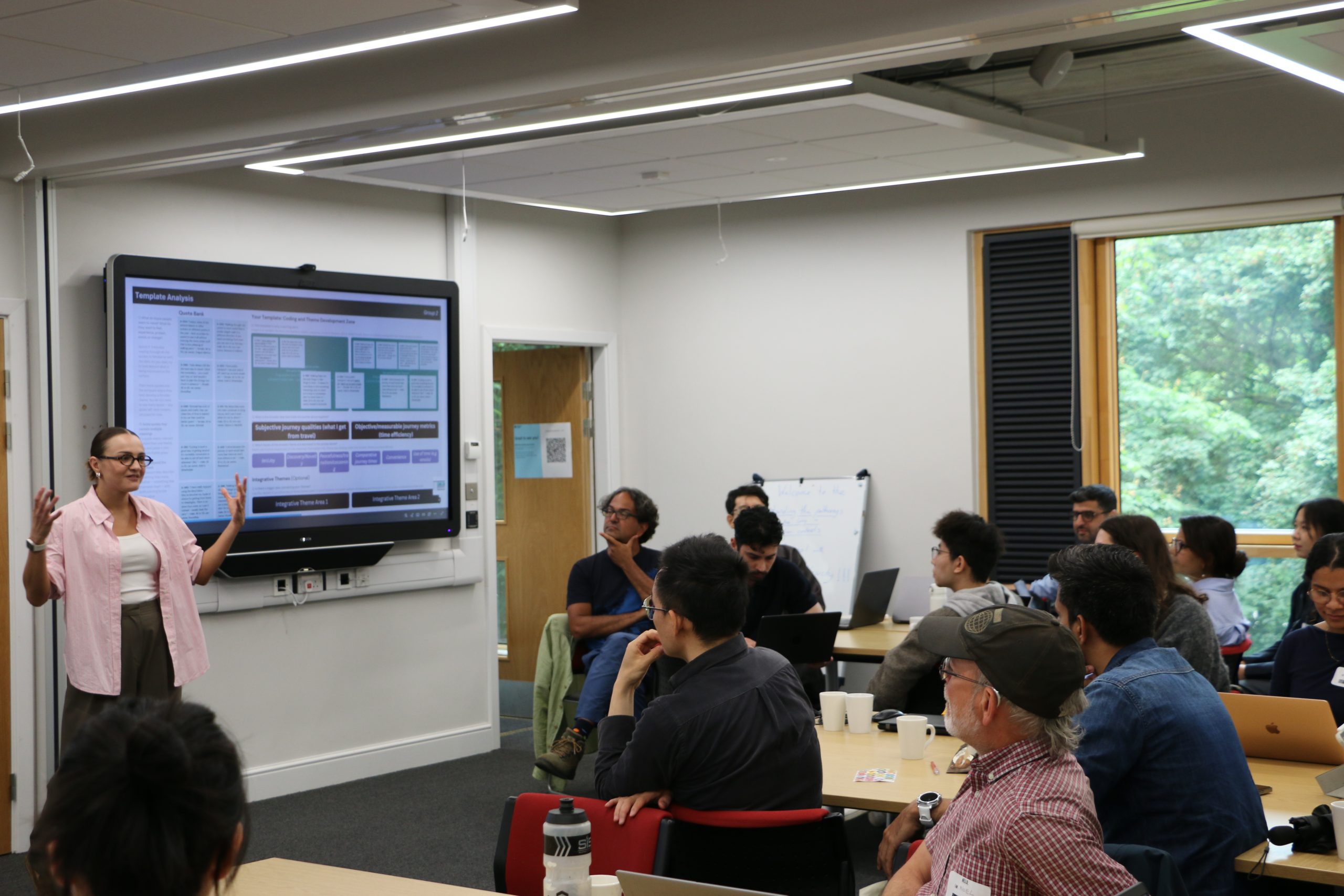
From the INFUZE perspective, Elena Alyavina led an interactive session on Template Analysis. Using qualitative survey data from the INFUZE Call-To-Action survey, participants worked collaboratively to develop codes, identify themes, and reflect on how analytical interpretations are constructed and refined.
Additional sessions explored a range of methodological perspectives, including sensor network design for digital twins in car-low urban areas, as well as research into cycling safety perceptions and differences in how people use rating scales in surveys. Together, these sessions underscored the interdisciplinary nature of research required to support car-low transitions.
The afternoon turned towards professional development and knowledge exchange. Sessions on grant writing and securing large-scale funding provided practical insights for early-career researchers, while poster presentations showcased the progress and findings emerging from both XCARCITY and INFUZE.
Day 3: Looking Ahead
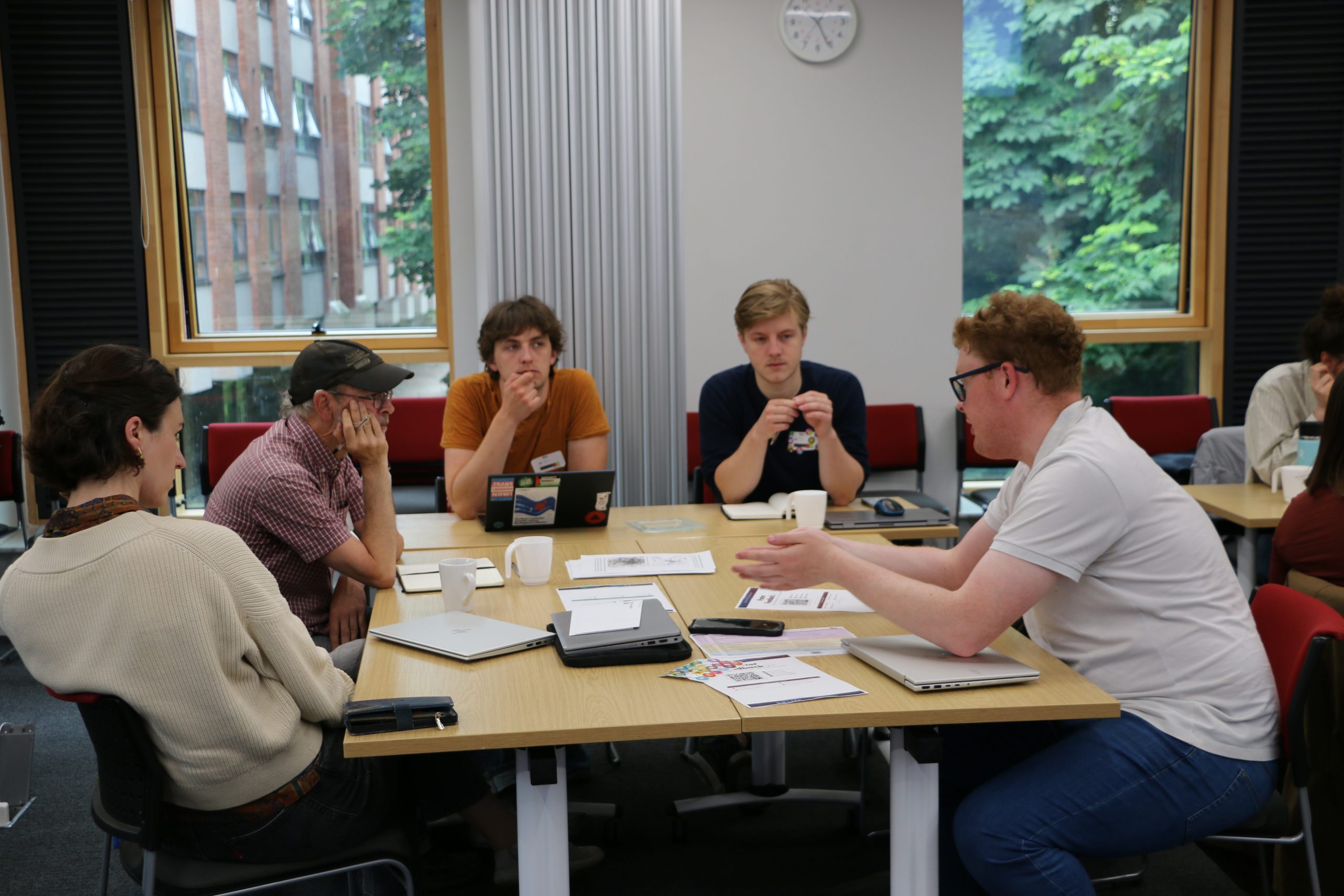
The final day focused on future directions. Building on discussions from the previous sessions, participants identified key research gaps and explored opportunities for continued collaboration between the two projects.
These discussions highlighted the importance of continued interdisciplinary exchange and collaboration in addressing the complex challenges of transforming urban mobility systems. Maaike will remain in Leeds for six weeks to further explore this collaboration.
A Collaborative Step Forward
A key realisation emerging from the summer school was the difference in approaches between the two projects. XCARCITY places a stronger emphasis on the development of technical tools and design-based solutions for stakeholders, while INFUZE focuses more on citizen engagement and understanding societal perspectives. Rather than being conflicting, these approaches proved to be complementary, highlighting the importance of combining technical innovation with social understanding in advancing car-low urban futures.
The summer school in Leeds brought together diverse perspectives on these themes. Through a combination of lectures, interactive sessions, and field-based learning, participants deepened their understanding of both the challenges and opportunities in this field. The communication sessions by Colin Pinks further supported participants in developing their presentation skills.
Beyond the specific insights gained, the event reinforced the importance of collaboration across projects, disciplines, and national contexts. As XCARCITY and INFUZE continue their work, the connections and ideas developed during these three days will help shape future research and innovation.