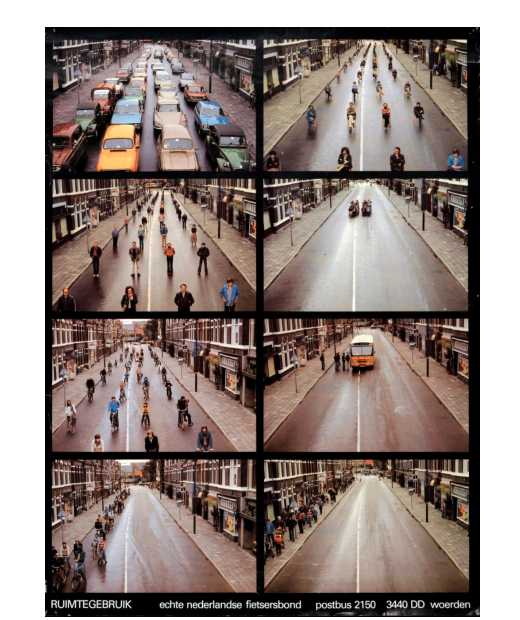
The importance of the bicycle in shaping urban sustainable mobility systems is often overlooked. In order
to create healthier, cleaner, and more livable cities, a shift away from car dominance is needed, and
subsequently, the bicycle should get a more prominent role in the mobility system. Cycling is associated
with increased health benefits, reduces emissions, and requires less space than cars, an increasingly
important factor with the space scarcity in increasingly dense areas in urban situations.
In the Netherlands, the bicycle already has a more prominent role in their mobility system as compared
to other countries. It is a high-cycling country with cycling flavoring national policies over the last decades.
Yet substantial differences are present in cycling performance between Dutch cities, explained by the
differences in bicycle use. This thesis exposes the underlying determinants of these differences and dives
into the role of local cycling policies involved. The research addresses a notable gap in the literature as
existing literature often focuses on cross-country comparisons or single-city case studies, while providing
an intra-country comparison analysis enables insights into location specific behavior within the same
national contexts and national policies. It focuses thus on the local aspects of cycling, as cycling is a very
location-specific phenomenon. Additionally, as the role of local cycling policy is underexposed, this study
not only addresses this gap, but simultaneously provides societal relevance by providing municipalities
with valuable insights into how they can increase their cycling performance with hands-on
recommendations.
Following the insights from the literature review, it became clear that the determinants for cycling
performance act on different levels, which are trip-, person-, environment- and city-level. This study
conducts a multilevel modelling approach. This modelling technique allows for in-depth insights into not
only the effect of all determinants acting on these levels, but also includes cross-effects between the
levels. The study makes use of a mixed method technique in which existing quantitative data on travel
behavior at the trip and person level (ODiN) has been combined with environmental level data from CBS and infrastructural data from the Fietsersbond. This has been combined with insights from 16 semi-
structured interviews with experts on the role of local cycling policies in several city-specific contexts.
Key findings reveal that there is a crucial role of local authorities in shaping cycling performance, as
several hardware and orgware measures appear to be of importance. Providing higher concentrations of
separated cycling infrastructure, mixed-use urban forms, and increasing transit accessibility are all
measures that increase cycling performance. Furthermore, regarding the role of local policy on cycling
performance, one of the orgware measures included in the model seems particularly important, which is
ensuring a stable organizational structure. This includes that municipalities should focus on formulating
clear and ambitious policy goals and associated concrete implementation plans. Besides that, they should
ensure structural financial resources. A key underlying condition of this is the presence of a consistent
policy context, both in organizational stability and regarding politics. Besides the statistical model, the
interviews showed that there is a mutual willingness for a constructive collaboration between
municipalities and local departments of the Fietsersbond. The underlying condition to led these
collaborations flourish is transparent communication.
The recommendations for municipalities are that they should invest in not only the above-mentioned
hardware measures, but should simultaneously ensure a stable organizational structure with clear policy
goals, concrete implementation plans, structural financial budgets, and a consistent policy environment.
These measures can significantly improve cycling performance and contribute to a sustainable urban
mobility system. In conclusion, this research demonstrates that while individual and trip-level factors
dominate cycling behavior, the role of the municipality cannot be underestimated, as several hardware
measures and a stable organizational structure play a crucial role in enabling more sustainable mobility
systems. These insights give municipalities hands-on measures to work on, building further on creating
healthier and sustainable cities.

Author: Gelissen, Martijn W.J.
Publication date: 2026