Author: Tian Zwart
On 19 March, XCARCITY welcomed a group of students together with William Riggs from the University of San Francisco for a full-day programme in Delft, hosted at Connekt. The visit combined learning about carlow urban design with the very first real-world test of the new XCARCITY Stakeholder Game. The day offered lively discussions, hands-on experimentation, and valuable insights for further developing the game.
Introducing the XCARCITY Stakeholder Game
After a warm welcome by Bart van Arem and a historical “time travel through Delft” by Maria Salomons, the students were introduced to the first playable version of our Stakeholder Game. Developed over the past weeks together with Linette Bossen from Even Groene Vrienden*, the game challenges players to design a new car‑low neighbourhood through the perspective of different citizens. It also serves as a tool for communicating policy decisions by showing how urban design choices are made by balancing diverse, and sometimes competing, priorities.
At three tables, students stepped into roles such as Student, Retiree, Parent, Entrepreneur, Young Worker, and even Mother Nature. Under the guidance of Lisanne de Haan, who explained the rules and moderated questions, the groups set out to collaboratively shape their neighbourhoods within limited resources and competing priorities. The session was creative, and at times surprising for the inventors as well, as the students challenged assumptions and uncovered areas where the game could evolve further.
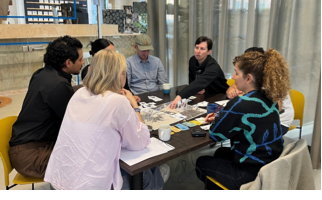
Figure 1: Group discussion.
What We Learned: Key Reflections
This was the first time the game was played outside the development team, offering a valuable opportunity to see how the concept game functions in practice. This initial test led to several key reflections that will guide the next steps in development.
1. Strong Engagement and Clear Potential
Students enthusiastically immersed themselves in their stakeholder roles, engaged actively with the materials, and produced thoughtful and creative neighbourhood designs. Their willingness to debate different priorities showed that the game can effectively spark meaningful conversations about car‑low planning and the trade‑offs involved. The session also confirmed the game’s added value as a tool for communicating policy decisions in an accessible and interactive way. For a first external playtest, this strong level of enthusiasm and interaction demonstrated that the game has a solid foundation to build on.
2. Defining Scale, Space, and Resources More Clearly
Groups noted that the physical and demographic parameters of the game need to be more explicit. Questions such as “How many residents will live in this neighbourhood?”, “How many people fit in each home?” and “How much space does a parking area actually take?” came up frequently.
Players also observed that the current starting budget allows almost anything to be built, reducing the need for negotiation. We will therefore explore lowering the budget and clarifying spatial constraints.
3. Sharpening Stakeholder Roles and Motivations
Some characters were too easy to convince, leading to less tension than hoped for. Future versions will assign clearer—and in some cases non‑negotiable—priorities, such as a strongly car‑oriented resident resisting parking reductions or Mother Nature opposing new construction. Suggestions also included using “green points” and “grumpy points” more explicitly or giving each player specific objectives to defend.
4. Improving Practical Tools and Moderation
The playtest highlighted the need for more support materials, including:
• A calculator or spreadsheet to track budgets
• Additional cards for schools, healthcare, and supermarkets
• Better context about existing facilities around the neighbourhood
• A clearer structure for the moderator (“the municipality”), especially for realism checks
Some groups also suggested introducing a fixed game board to make the spatial design phase more intuitive.
5. Game Flow, Timing, and Replayability
Most tables welcomed a short break after the first round, and after about ninety minutes players reached the limits of the prototype. One group did not manage to complete drawing their neighbourhood.
Additionally, participants recommended adding “disruptive events” to keep the energy high and introduce new dynamics.
Further playtests with new participants will be important for refining these ideas. If you are interested in participating, contact Tian Zwart (t.zwart@tudelft.nl).
Afternoon Programme: Seeing Delft in Practice
After lunch, the students explored Delft through two guided walks, observing various car‑low interventions and enjoying the lively marketplace in the sun (including an ice cream stop). The walk provided context for the morning’s game discussions by grounding the ideas in real streets and public spaces.
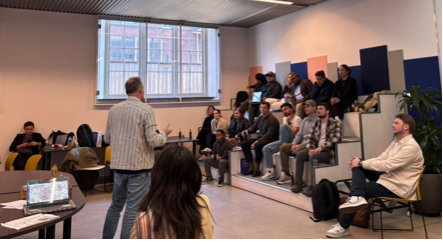
Figure 2: Pitch before the panel discussion.
Back at Connekt, the group joined a panel discussion featuring four speakers with different perspectives on Delft’s mobility transition:
- Julian Gommers (City Councillor, STIP)
- Arjan Steendam (Entrepreneur)
- Jeroen Jansen (Project Manager, Municipality of Delft)
- Rob Stikkelman (Resident with concerns about car‑low policies)
Short pitches grew into an open, lively debate about the challenges of designing mobility systems that balance accessibility, sustainability, and fairness. Students appreciated hearing from real stakeholders with sometimes conflicting views.
The day concluded with informal drinks, giving participants space for one-on-one conversations with the speakers and organisers.
Looking Ahead
For the visiting students, the visit offered a mix of hands-on learning, real-world urban insights, and direct contact with stakeholders. For XCARCITY, it was a very valuable first test of the Stakeholder Game. Seeing the concept in action helped us understand what already works, and what needs refining.
Based on the reflections, our main focus areas for the next development phase will be:
- Clarifying scale, budget, and spatial constraints
- Strengthening stakeholder roles to create more negotiation and tension
- Expanding the set of cards and tools available
- Supporting moderators in guiding realism and structure
- Testing with more diverse participants, including non‑experts
- Exploring options for a game board and disruptive event cards
Several ideas emerged around using the game for public engagement, policy communication, and even as part of student projects in serious game design. The first playtest showed that the game has strong potential. We look forward to improving it through more iterations, more players, and more collaborative thinking.
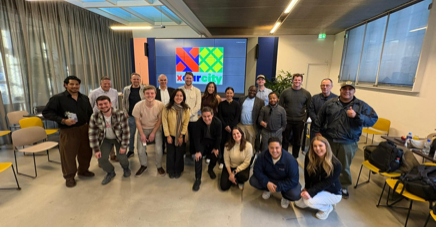
Figure 3: Group picture at the end of the full-day programme.
If you would like to test the game in your own organisation, or collaborate on its development, we would be happy to hear from you. Send an email to t.zwart@tudelft.nl.
*Do you want to know more about Even Groene Vrienden? Check out their website: www.thelearningcommunities.nl