Author: Tian Zwart, March 2026
On 3 March, XCARCITY contributed to Digitale Tweelingen in de Planketen, a national event held at the Prodentfabriek in Amersfoort. Organised within the Zicht op Nederland – Digitale Tweelingen programme of the Dutch Ministry of Spatial Planning, and supported by VNG, DMI and Geonovum, the day brought together a growing community working with digital twins across planning, mobility and the built environment. The central question was no longer whether digital twins should be used, but how governments, researchers and practitioners can apply them in an integrated and cross-sectoral way throughout the planning chain.
During the XCARCITY session, a series of connected presentations highlighted different dimensions of the project’s work. Jennifer Faber (NWO) opened with an overview of NWO’s mission and the role of major research programmes in generating long-term societal impact. She emphasised the importance of strong partnerships between knowledge institutes, governments and private stakeholders, an approach reflected in the ambition and structure of XCARCITY.
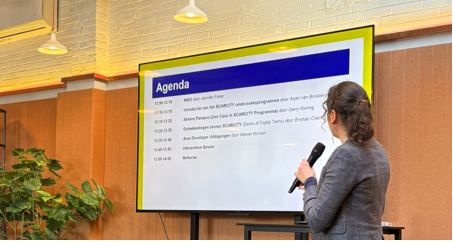
Figure 1: Opening presentation by Jennifer Faber (NWO).
Arjan van Binsbergen (TU Delft) introduced the XCARCITY programme and its focus on using federated digital twins to support the design of car-low areas across the Netherlands. He explained how mobility, spatial design and environmental quality are interlinked, and how digital twins make these trade-offs transparent in the planning process.
Figure 2: Arjan van Binsbergen Introducing the XCARCITY Programme.
The session continued with a presentation of one of the three uses cases, as part of the XCARCITY Programme: Almere Pampus. Gerry de Koning (Municipality of Almere) showed how the strategic placement of amenities, public transport and cycling infrastructure can influence travel behaviour and support the STOMP principle. He dedicated some time to presenting the results that came out of the XCARCITY Programme for the Pampus Design, showcasing the results of the proposed scenarios with varying parking norms, demonstrating their effects on travel patterns, environmental quality and parking displacement in neighbouring areas.
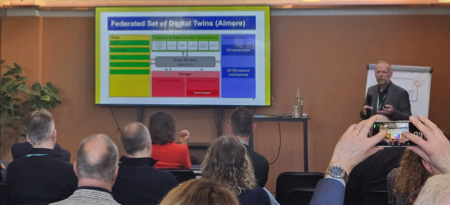
Figure 3: Gerry de Koning presenting the XCARCITY Almere Pampus Use Case Results.
Building on these insights, Enshan Chen (TU Delft), one of XCARCITY’s post doc researchers, demonstrated the role of the digital twin for the Amsterdam Zuidas use case. He noted how the technical foundation will bring together the project’s research into a practical and interactive tool. His presentation showed how digital twins can integrate mobility, accessibility and environmental factors into a single decision-support environment.
Figure 4: Presentation by Enshan Chen (Post Doc Researcher).
The final presentation was given by Marcel Michon (Buck Consultants International), one of XCARCITY’s 32 contributing partners. He connected the digital twin approach to the day-to-day challenges of area developers. Using examples from Dutch cities, he showed how economic ambitions, spatial planning and mobility concepts often remain insufficiently aligned. He emphasised the need for integrated mobility strategies tailored to different user groups, closely matching the ambitions of XCARCITY’s digital twin work.
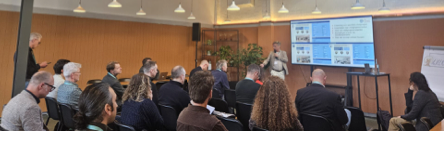
Figure 5: Presentation by Marcel Michon (Buck Consultants International).
The session concluded with a short interactive round. Participants reflected on how limited urban space should be allocated, on the distinction between what generates financial value and what benefits society, and on which alternatives are needed when parking norms are reduced and where these alternatives should be provided. The audience represented many different sectors, which created an opportunity to underline the importance of mobility in area development and to explore these questions from different professional perspectives. Together, the contributions offered a clear overview of XCARCITY’s multidisciplinary work, spanning research, real-world use cases, technical development and practical application. The session reinforced the project’s central message: integrated area development requires integrated tools, and digital twins provide a powerful means of supporting evidence-based and future-proof urban design.